
Ferry Ireland
Roscoff - Cork
The direct ferry from Brittany to southern Ireland - a relaxed overnight crossing, no detour via Britain
- Up to 2 sailings a week during the seasonal operating period
- Direct overnight route of around 14 to 15 hours with Brittany Ferries
- Motorhomes, motorcycles and bicycles welcome
Route guide
Roscoff - Cork ferry at a glance
Table of Contents
Everything about the Roscoff - Cork route with Brittany Ferries: getting to Port de Bloscon, check-in times, facilities on board, vehicle and pet rules, and arrival and onward travel from Cork.
Getting to the terminal in Roscoff
The ferry departs from Port de Bloscon, Roscoff's ferry terminal in northern Brittany. By car, the port is reached via the N58 from Morlaix, around 35 minutes away; from there the N12 heads towards Rennes, and the D69 runs south into Brittany towards Brest and Quimper. There is a free long-stay car park right at Bloscon above the marina, with a further free space for motorhomes opposite the vehicle check-in area.
Travelling without a car, bus line 29 runs from Morlaix to the port (around 35 minutes); Morlaix is on the French TGV network. Roscoff itself has no railway station. It's about a 15-minute walk from the terminal into the town centre, and in summer the Rosko Bus shuttle also runs.
Check-in and departure
Be at the terminal at least 45 minutes before departure, whether travelling by vehicle or on foot. Travelling with a pet, allow at least 90 minutes. Since the Roscoff - Cork crossing departs in the evening and sails overnight, build in a comfortable margin - late vehicles will not be allowed to board.
Carry a valid travel document. Ireland is outside the Schengen Area, so a passport is the safest choice, and identity checks are possible at the terminal.
On board
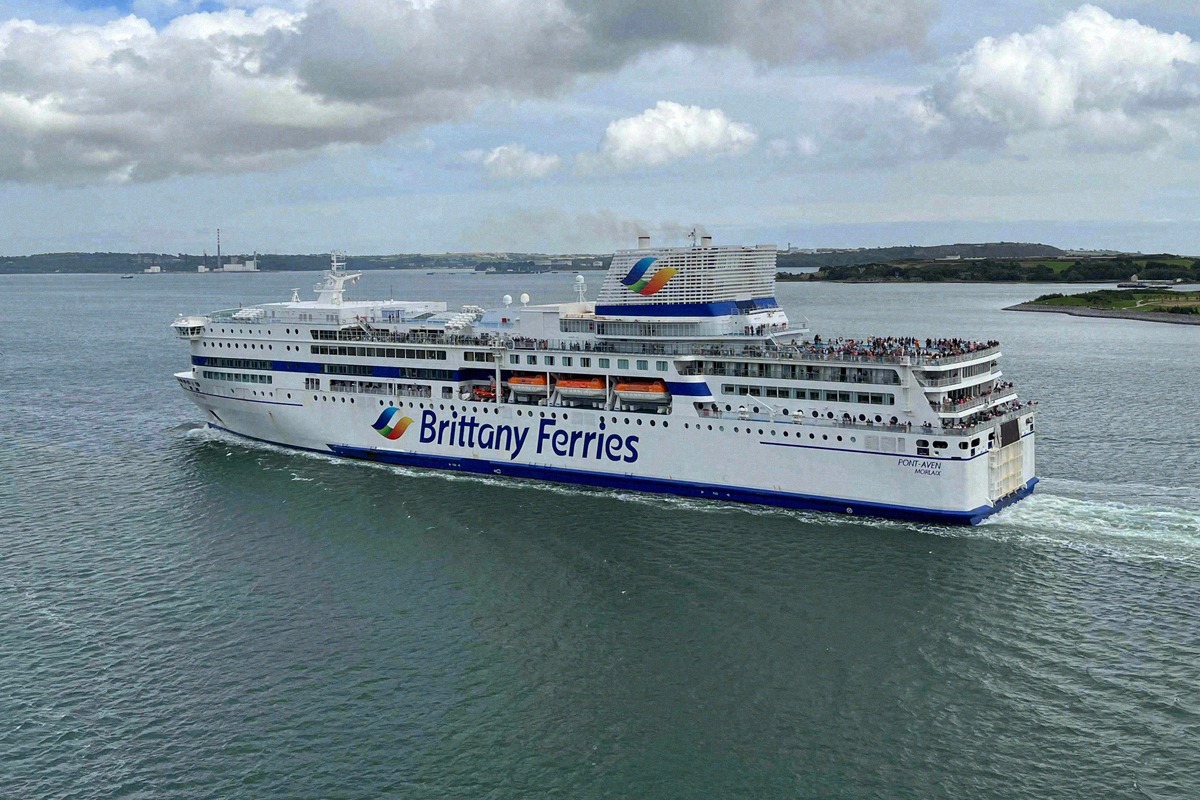
Brittany Ferries' two cruise ferries alternate on this route: the Pont-Aven as flagship, and the smaller Armorique. The Pont-Aven offers en-suite cabins in several categories, plus a heated indoor pool, restaurants, bars, shops, a cinema and a children's play area; Wi-Fi on board is free. Travelling without a cabin, the lounge has reclining seats. For the overnight crossing, a cabin is worth booking so you arrive in Ireland well rested.
On board, you pay by the usual credit and debit cards in euros; there's no need for foreign currency for the crossing, and Ireland itself also uses the euro.
Vehicle, bike and pet
Cars, motorcycles, motorhomes and caravans are all welcome. A standard car is one up to 5.00 m long and 1.83 m high; larger vehicles incur a surcharge. Enter the dimensions correctly, including any roof box or bike rack, or you risk being charged extra at the port. Details on the vehicle package are in the vehicle guide.
Dogs and cats can travel too: either in a pet-friendly cabin (the Pont-Aven has around two dozen of these) or in the vehicle on the car deck. Outside a cabin or vehicle, dogs must be muzzled. To enter Ireland you need a microchip, a valid rabies vaccination and an EU pet passport; dogs also need a vet-administered tapeworm treatment 1 to 5 days before arrival. Full details are in the pets guide.
Arrival in Cork and onward travel
In Ireland, the ferry docks at Ringaskiddy, Cork's ferry port on the south coast. From here, take the N28 onto the N40 (Cork South Ring Road) and on into the city; it's around 30 to 40 minutes to the centre. Ringaskiddy is the gateway to the south-west of Ireland: Cork, the coastal town of Kinsale and the Kerry peninsulas are all within a manageable day's drive.
Without your own vehicle, Bus Éireann connects Ringaskiddy with Cork city, and the terminal is a short walk from the bus stop. The port has no railway station of its own; the nearest is in Cork.
Tickets and fares
Brittany Ferries offers the crossing in three fare types: the cheaper Economy fare with no refunds, the popular Standard fare with fee-free changes up to around two weeks before departure, and the flexible Flexi fare, which can be cancelled shortly before travel for a partial refund. Booking a return together, or booking early, generally brings the price down. The booking window shows current prices for your travel date; the price overview gives a general sense of costs.
Roscoff - Cork
Direct from Brittany to Ireland
The Roscoff - Cork route links Brittany directly with southern Ireland without a detour via Great Britain. The overnight crossing takes around 14 to 15 hours.
Brittany Ferries operates the route seasonally, with up to two sailings a week. The vessel and exact operating period vary, so check the timetable for your date. Cars, motorhomes, motorcycles and foot passengers can be booked subject to the selected sailing.
- Crossing time
- approx. 14-15 hrs
- Operator
- Brittany Ferries
- Frequency
- seasonal, up to 2x per week
Next departures
FAQ Roscoff - Cork
Frequently asked questions
Questions and answers about the Roscoff - Cork ferry route
Which ferry company sails from Roscoff to Cork, and which ships are used? +
The Roscoff - Cork route is operated exclusively by Brittany Ferries. The ships used on this route are the Pont-Aven (flagship) and the Armorique.
How often does the Roscoff - Cork ferry run? +
The route operates seasonally, with up to two sailings a week. The exact operating period, days and times vary; check the timetable for your date.
How long is the ferry crossing from Roscoff to Cork? +
The crossing takes around 14 to 15 hours and normally runs overnight. A cabin is recommended but not compulsory where reclining seats are offered.
How much does the Roscoff to Cork ferry cost? +
Fares are dynamic and depend on the season, demand, vehicle type and how far ahead you book. Foot passengers pay considerably less than those bringing a car or motorhome, and booking early tends to bring the price down. Brittany Ferries also offers return and early-booking fares. The booking window shows current prices for your travel date, and the price overview gives a general sense of costs. A cabin is not included in the base fare and is booked as an extra.
Can I bring my vehicle on the ferry? +
Yes, you can bring cars, motorhomes, caravans, motorcycles and bicycles. A standard car is one up to 5.00 m long and 1.83 m high; anything larger incurs a surcharge. Enter the dimensions correctly, including any roof box or bike rack, or you risk being charged extra at the port. Full details on the vehicle package are in the vehicle guide.
Can I bring my dog or cat? +
Yes, dogs and cats can travel with you. On the Pont-Aven you can either book a pet-friendly cabin (4-berth, washable flooring) or your pet can stay in the vehicle on the car deck. Outside a cabin or vehicle, dogs must be muzzled. To enter Ireland you need a microchip, a valid rabies vaccination (at least 21 days before travel) and an EU pet passport; dogs also need a vet-administered tapeworm treatment 1 to 5 days before arrival. Full details are in the pets guide.
When do I need to be at the port, and where exactly are the terminals? +
Be at the terminal at least 45 minutes before the scheduled departure - this applies to vehicle and foot passengers alike. Travelling with a pet, allow at least 90 minutes. In Roscoff, the ferry departs from Port de Bloscon in Brittany; the nearest railway station is Morlaix. In Cork, the terminal is in Ringaskiddy, around 30 to 40 minutes south of the city centre.