
Ferry Ireland
Holyhead - Dublin
Stena Line and Irish Ferries from Anglesey to Dublin, roughly every three hours
- Up to 8 sailings a day each way
- 3 hrs 15 min to 3 hrs 30 min crossing
- Passport required for all travellers
Route guide
Holyhead - Dublin ferry at a glance
Table of Contents
Stena Line and Irish Ferries between them sail from Holyhead to Dublin up to eight times a day in each direction. Ferries currently leave Holyhead at 01:30, 04:00, 07:30, 10:00, 13:15, 16:00, 19:30 and 22:15, and Dublin at 01:15, 04:30, 07:30, 10:15, 13:45, 16:30, 19:45 and 22:30. The crossing takes 3 hours 15 minutes to 3 hours 30 minutes, and every traveller needs a passport.
Getting to the terminal in Holyhead
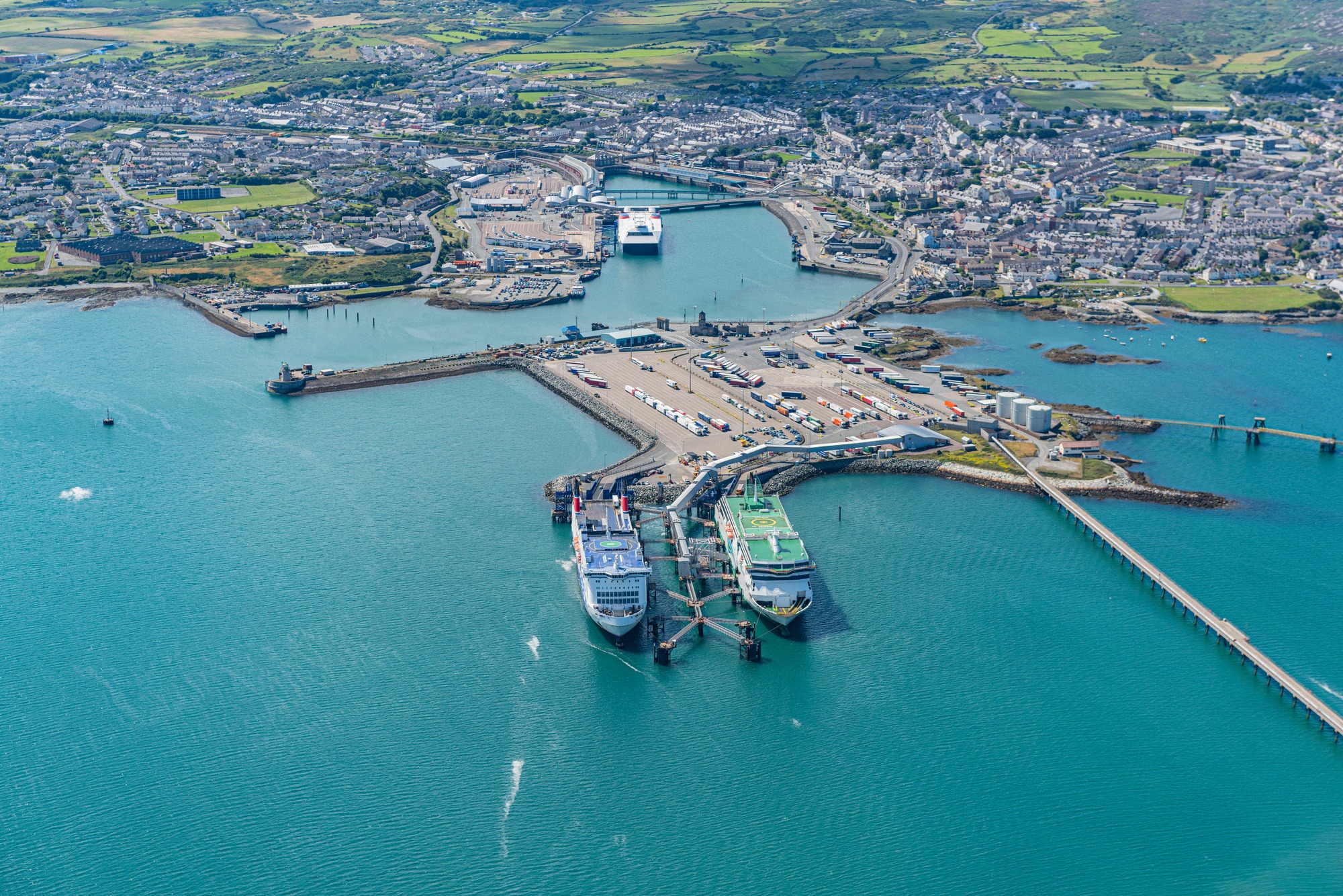
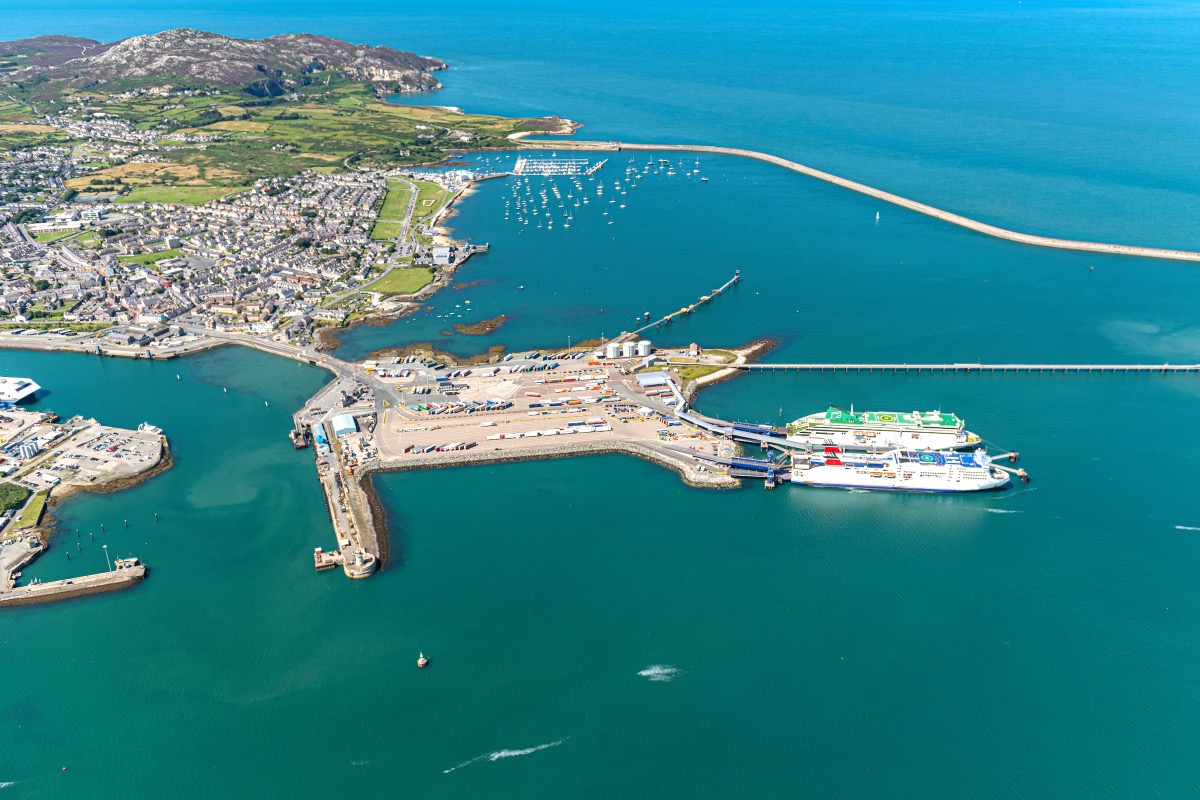
Holyhead ferry port is on Anglesey in North Wales, right at the end of the A55 expressway. For your satnav, use Stena House, Station St, Holyhead LL65 1DQ. From Chester the terminal is about 1 hr 40 min away, from Liverpool around 2 hrs.
The port is now cashless. The long-stay car parks P1 (height limit 2.4 m) and P2 (2.1 m) are run by Horizon Parking; in front of the terminal you can only stop for 20 minutes to drop off or pick up. Electric cars park free for two hours while charging. Foot passengers arrive by train: Holyhead station is linked directly to the ferry terminal through Terminal 1.
Check-in and departure
With Stena Line, check-in closes 30 minutes before departure with a vehicle and 40 minutes on foot. Irish Ferries applies 30 minutes across the board for vehicles, foot passengers and cyclists, and one hour for coaches. Irish Ferries foot passengers hand in their luggage at check-in and collect it in the arrivals terminal. Vehicles that arrive late will not be boarded, so leave yourself some time in hand.
Since 28 September 2026, everyone travelling on this route in either direction needs a valid passport, including British and Irish citizens and children. Irish Ferries also accepts the Irish Passport Card; a driving licence or national ID card is no longer enough with either operator. Enter the names on your booking exactly as they appear in your passport.
On board
Stena Line sails with the Stena Adventurer and the Stena Estrid: restaurants and bars, a duty-free shop, the Stena Plus lounge, quiet recliner areas, cabins and free Wi-Fi. You can pay by card, Apple Pay or Google Pay, or in cash in euros and sterling. Irish Ferries uses the Ulysses and the James Joyce, both with a Club Class Lounge, restaurants, shops and a children's area; the Ulysses also has cinemas.
The Dublin Swift fast ferry, which covered the route in just over two hours, is not currently in the Irish Ferries timetable. Every sailing uses the large ferries, so allow 3 hours 15 to 30 minutes. A cabin is worth having on the night sailings; during the day a seat in the lounge is enough.
Vehicles, bikes and pets
Cars, motorbikes, motorhomes and caravans are all carried. The fare depends on vehicle length, so enter the correct dimensions when you book; there is more on this in our motorhome guide. Cyclists with Irish Ferries check in like foot passengers, 30 minutes before departure.
Pets must be added to your booking and need valid vaccinations and travel documents. Stena Line has dedicated pet cabins, and Irish Ferries offers a Pet Den lounge and pet cabins on the James Joyce. The entry rules are set out in our pets guide.
Arriving in Dublin and onward travel
The ferries dock at Dublin Port, around 6 kilometres east of the city centre; Stena Line uses Terminal 2 (Alexandra Rd, D01 WD28). A shuttle bus meets every Stena sailing and takes 30 to 35 minutes into the centre; tickets are sold by Nolan Coaches. From the Irish Ferries terminal a regular bus runs into town. There is no rail link to the port: the nearest Luas stop, The Point (Red Line), is a good three kilometres away. Taxis wait at the terminal.
Tickets and fares
Both operators use dynamic pricing, so booking early usually pays off. Stena Line offers Economy, Flexi and Premium fares, while Irish Ferries has Economy, Flexi and Flexi+; the higher fares give you more room to change your booking. Foot passengers from Britain can book train and ferry together on a SailRail ticket. Our price overview shows prices by operator and vehicle.
Holyhead - Dublin
Two operators, up to eight sailings a day
Holyhead on Anglesey and Dublin are linked by the most frequent ferry service between Britain and Ireland. Stena Line and Irish Ferries each sail up to four times a day in each direction, taking turns, so a ship leaves roughly every three hours, through the night as well.
Stena Line uses the Stena Adventurer and the Stena Estrid, Irish Ferries the Ulysses and the James Joyce. All four are large ferries for cars, motorhomes and foot passengers, and the crossing takes 3 hours 15 minutes to 3 hours 30 minutes. The Dublin Swift fast ferry is not currently in the Irish Ferries timetable.
- Crossing time
- 3 hrs 15 min - 3 hrs 30 min
- Operator
- Irish Ferries & Stena Line
- Frequency
- 6–8×/day
- From
- €36
- Irish Ferries
- Stena Line
Next departures
FAQ Holyhead - Dublin
Frequently asked questions
Questions and answers about the Holyhead - Dublin ferry route
When does the ferry from Holyhead to Dublin sail? +
Ferries currently leave Holyhead at 01:30, 04:00, 07:30, 10:00, 13:15, 16:00, 19:30 and 22:15, and Dublin at 01:15, 04:30, 07:30, 10:15, 13:45, 16:30, 19:45 and 22:30. Stena Line and Irish Ferries share these times, each with up to four sailings per direction a day. Which operator sails at which time changes with the timetable; the timetable shows the departures for your travel date.
How long is the crossing, and is there still a fast ferry? +
The crossing takes 3 hours 15 minutes to 3 hours 30 minutes, with Stena Line and Irish Ferries alike. The Dublin Swift fast ferry, which covered the route in just over two hours, is not currently in the Irish Ferries timetable. Every sailing uses the large ferries, so plan for the longer crossing.
Stena Line or Irish Ferries: what's the difference? +
Both use large ferries with similar crossing times; the differences lie in the details. Foot passenger check-in closes 40 minutes before departure with Stena Line and 30 minutes with Irish Ferries; with a vehicle it is 30 minutes for both. Stena Line runs its own shuttle bus into the city for foot passengers in Dublin. Irish Ferries has a Pet Den lounge and pet cabins on the James Joyce, and cinemas on the Ulysses.
What ID do I need for the Holyhead - Dublin ferry? +
Since 28 September 2026, everyone travelling on this route in either direction needs a valid passport, including British and Irish citizens and children. Irish Ferries also accepts the Irish Passport Card. A driving licence or national ID card is no longer enough. The names on your booking must match your passport exactly.
How do I travel from Holyhead to Dublin as a foot passenger? +
Holyhead station is right next to the ferry terminal and linked to it through Terminal 1. With Irish Ferries, you hand in your luggage at check-in and collect it again in the arrivals terminal. In Dublin, the Stena Line shuttle bus meets every Stena sailing and takes 30 to 35 minutes into the centre; from the Irish Ferries terminal a regular bus runs into town. From Britain you can combine train and ferry on a SailRail ticket.
Can I take my car, motorhome or dog? +
Yes, both operators carry cars, motorbikes, motorhomes and caravans; give the correct vehicle dimensions when you book. There is more on crossing with a camper in our motorhome guide. Dogs and cats must be added to your booking: Stena Line offers pet cabins, Irish Ferries the Pet Den lounge on the James Joyce. Our pets guide sums up the entry rules.
How much is the ferry from Holyhead to Dublin? +
Prices depend on the season, how far ahead you book, your vehicle and the fare type. Travelling on foot costs considerably less than taking the car, and booking early usually gets you the lowest fares. Our price overview breaks it down by operator and vehicle.