
Timetable
Ferry Ireland by car
Compare car ferries to Ireland - routes, costs and travel tips for bringing your vehicle
- Car travel on every ferry route - vehicle and driver always included in the ticket price
- Direct crossings or via Britain, find the best car ferry for your trip
- Tips on driving on the left, tolls, insurance and refuelling in Ireland
Car ferries to Ireland
Car ferries to Ireland
Direct car ferries to Ireland
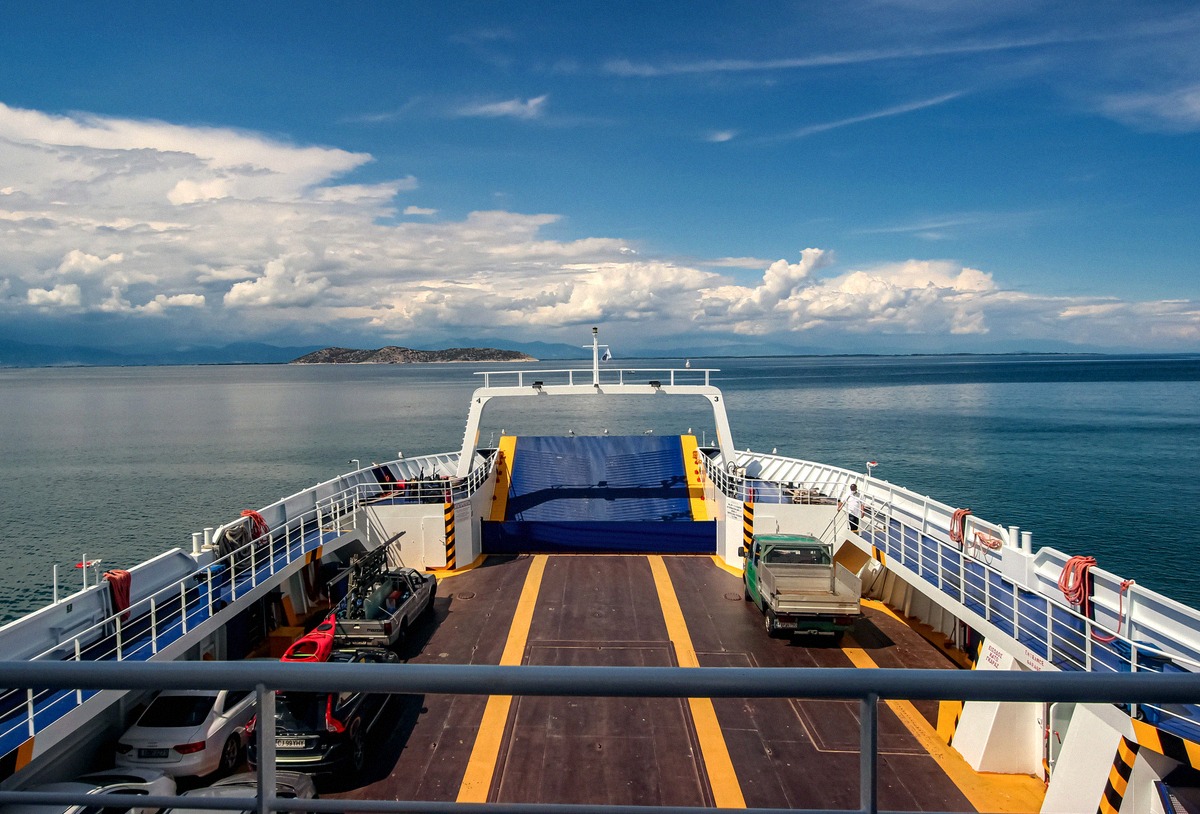
On the direct ferries from mainland Europe, you simply drive your car on board. The crossing takes 14-24 hours depending on the route - your vehicle stays parked on the car deck while you spend the time in your cabin.
Dunkirk - Rosslare
For the current and announced 2026 service, see Dunkirk - Rosslare and the timetable. The overnight route carries vehicle travellers only, with a cabin and meals included.
Cherbourg - Rosslare
For current sailing frequency and journey time, see Cherbourg - Rosslare and the timetable. Rosslare is a practical arrival port for the southeast, Waterford and onward travel towards Cork.
Cherbourg - Dublin
The second link from Cherbourg goes direct to Dublin in around 19 hours, run several times a week by Irish Ferries. This route is a good fit for Dublin and the surrounding area, the east coast up to Belfast, the north-west with Donegal and Sligo, the Midlands, and as a starting point for a round trip of Ireland.
Roscoff - Cork
For the current seasonal operating period, frequency and crossing time, see Roscoff - Cork and the timetable. Arriving in Cork is convenient for the city, Kerry and the southwest.
Via Britain by car to Ireland
The classic route takes you by car across the Channel through Britain, then by ferry from the west coast to Ireland. The sea crossings to Ireland themselves are short, just 2-4 hours, but you have the drive across Britain on top.
Channel crossing
- Dover - Calais (90 min, P&O Ferries, DFDS, Irish Ferries - hourly departures)
- Channel Tunnel Folkestone - Calais (35 min driving time - the fastest option)
- Dover - Dunkirk (2 hrs, DFDS - an alternative to busy Calais)
- Harwich - Hoek van Holland (6.5-8 hrs, Stena Line - overnight ferry from the Netherlands)
- Hull - Rotterdam (11-12 hrs, P&O Ferries - overnight ferry)
Ferries from Britain to Ireland
- Holyhead - Dublin (3-3.5 hr crossing, Irish Ferries & Stena Line)
- Fishguard - Rosslare (3.5 hrs, Stena Line)
- Pembroke - Rosslare (4 hrs, Irish Ferries)
- Liverpool - Belfast (8 hrs, Stena Line - overnight ferry)
Driving in Ireland: what you need to know
Driving on the left
Ireland (and Northern Ireland) drives on the left. If you're coming from Britain, that's nothing new - you'll feel right at home. Coming from mainland Europe or North America, the switch takes a little getting used to at first, but it soon feels routine. Pay particular attention at junctions, when turning and at roundabouts (which flow clockwise). Most rental-car drivers adjust within an hour; bringing your own left-hand-drive car takes a bit more care, but it's entirely manageable.
Tolls
The Republic of Ireland has a manageable toll system. The main toll road is the M50 around Dublin, which is camera-enforced (you'll need an eTag or to pay online within 24 hours). Some motorways have traditional toll booths where you can pay by cash or card. Northern Ireland has no road tolls.
Insurance and the Green Card
To bring your own car into Ireland, you need valid car insurance that covers you there. Since 2020, a Green Card is no longer strictly required within the EU, but it's worth carrying one anyway. If you're entering via Great Britain (post-Brexit), keep your Green Card handy.
Refuelling
Fuel prices in Ireland tend to run a little higher than in much of mainland Europe. Petrol stations are well spread out even in rural areas, though distances can be longer in more remote parts of the west. Card payment is accepted almost everywhere.
Vehicle dimensions on the ferry
Most ferries accept cars up to 1.80-2.00 m in height at the standard rate. Taller vehicles (SUVs, vans) may cost a surcharge. Campervans and car-trailer combinations are charged by length.
Frequently asked questions
FAQ - Ferry Ireland by car
The key questions about the car ferry to Ireland, answered briefly.
Which routes let me bring my car?+
On all of them. Every Ireland ferry is a car ferry - from the direct routes out of France such as Cherbourg - Rosslare and Roscoff - Cork to the short crossings via Wales such as Holyhead - Dublin. Your car stays parked on the vehicle deck, which is closed off for the duration of the crossing.
How much does the car ferry to Ireland cost?+
The price depends on the route, vehicle size, season and how far ahead you book, and it's usually charged as a package covering the car and driver together. The short crossings via Wales tend to be cheaper on the ferry fare alone, while the direct ferries from mainland Europe save you the drive across Britain. You can compare all routes on price.
How big can my vehicle be on the ferry?+
Cars up to around 1.80-2.00 m in height travel at the standard rate; taller vehicles such as SUVs and vans may cost a surcharge. Campervans, caravans and car-trailer combinations are charged by length. Give the exact dimensions when booking, including any roof box or trailer - a few centimetres can shift you into a different price bracket.
Do I need to worry about driving on the left in Ireland?+
Yes, Ireland and Northern Ireland drive on the left. If you're used to driving on the right, as in most of mainland Europe or North America, the switch feels odd for the first few miles but soon becomes routine; coming from Britain, it's exactly what you're used to at home. Take extra care at junctions, when turning and at roundabouts (which you go round clockwise). Car insurance that covers you in Ireland is compulsory, and while a Green Card is no longer strictly required within the EU, it's worth carrying one - and having it to hand if you enter via Great Britain post-Brexit.